
How to write your supporting statement in the age of AI
David Young • November 2, 2026
Apply for a job in the charity sector and along with your CV, you’ll often be asked for a supporting statement. At which point you’ll inwardly groan, plan to do it after your CV, run out of time and end up cobbling something together at the last minute, in the time-honoured tradition.
Unless, that is, you remember that we’ve now got freely available, slightly sinister technology designed specifically for writing things that no-one else can be bothered to. Now you can summon up a professional-sounding statement in seconds - but will it actually help you?
Read on for the verdict, as we investigate...
How to write your supporting statement in the age of AI
Supporting statements are a valuable opportunity to explain how your skills (as listed on your CV) meet the requirements of the role (as listed in the job description), but let’s be honest: writing them is no-one’s idea of a good time.
So if there's an electronic genie offering to do the hard work for you and make you sound a whole lot better in the process, who’s going to say no?
Certainly not charity sector candidates, 64% of whom were already putting the likes of Claude and CoPilot to work on their applications in 2025, with many more having joined the party since then.
And for employers across all industries who have long bemoaned the quality of applications they receive (a candidate asks: ‘Have you read your job descriptions and adverts?’), it’s hard to argue with something that’s widely credited with raising standards.
However in both cases, the benefits of using AI tools begin to diminish the more widely used they are.
A candidate's AI-assisted application won't necessarily put them ahead of the pack, because the pack has moved along with them, while those whose applications have always excelled may find their competitive advantage has vanished overnight.
Meanwhile, charities accustomed to applications spanning the full spectrum from 'articulate and professional' to 'possibly written by dog?' find themselves with a glut of auto-generated efforts that are all perfectly acceptable, but with so little to choose between them that doing so becomes a far more onerous, time-consuming task than ever before. As a result, some charities have stopped requesting supporting statements altogether.
Knowing your luck, however, they won’t be any of the organisations you’re applying to, and there’s little chance of AI going back in the box. So when you do have a statement to write, what's the best way of going about it?
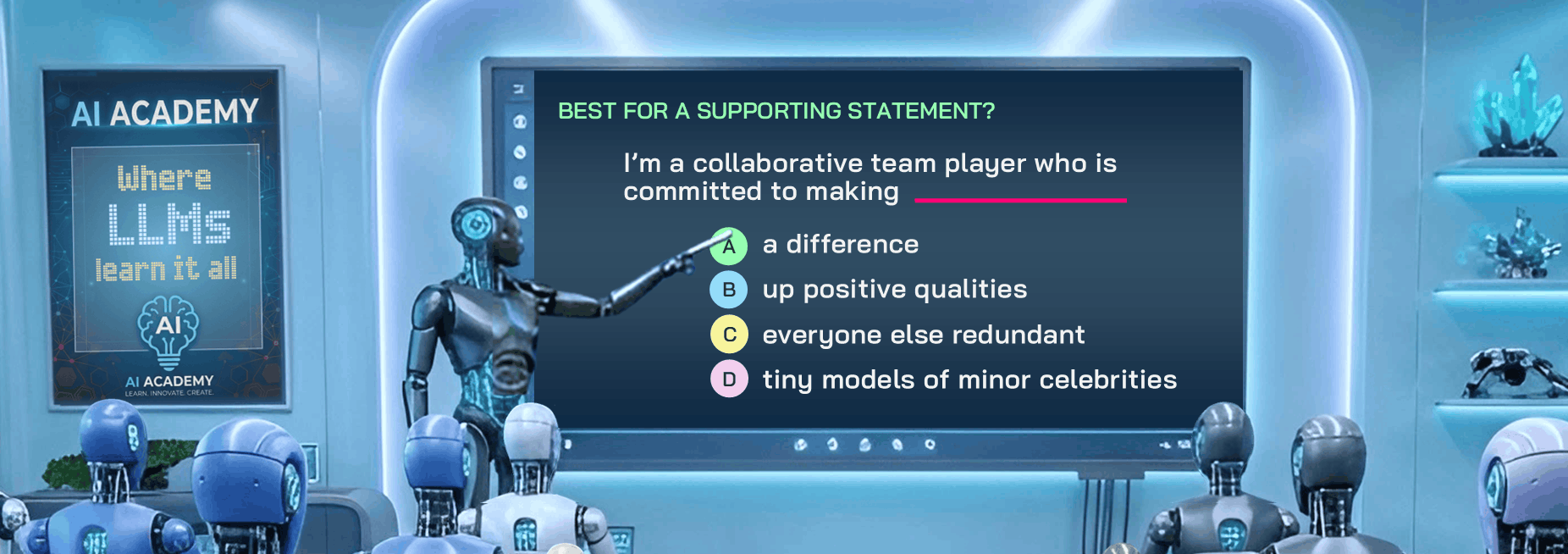
What should I include in a supporting statement?
Whether you're using AI or not, there are two key things that the reader needs to get from your statement:
- Why you want the job
- Why you’re the right person to do it
Let’s look at those in turn.
Why do you want the job?
This is often overlooked or underemphasised, but in the charity sector particularly, your motivation for wanting to join the organisation matters. Sure, some of it applies to any job – you need somewhere to live and would quite like to continue eating – but beyond that, why this organisation? Why now?
Perhaps your interest comes from personal contact or experience? Is there something about their mission that particularly resonates with you? How would this role move your career forward, and why would you find it rewarding?
This is also an opportunity to show that you understand who they are as an organisation, so find out as much as you can. Not with a view to spending half of the statement telling the reader about their own employer, but citing a project of theirs that impressed you or an initiative you strongly support can cast you as someone with a genuine interest in the organisation and at least a fair idea of what you'd be getting yourself into.
That's an underrated quality that can often play into hiring decisions, as someone who is clear-eyed about the role from the start is a much safer bet than someone whose expectations are set for a very uncomfortable meeting with reality in week one.

What makes you the right person for the role?
Your job here is to highlight the close match between your skills and experience and the requirements listed in the ad. Taking each in turn, give an example that shows how you meet it.
- If the role calls for organisational and presentation skills, talk about a project where you used them effectively.
- If it asks for experience of a particular system or tool, explain how long you've been using it and what for.
- If there’s a skill that you don’t have, acknowledge it, and give an example that shows you can learn things quickly.
- If there are multiple criteria you don’t meet, however, it’s probably not the right job, or at least, not one you’re likely to get in the current highly-competitive market.
Think of the person specification as a checklist and use examples to show (not simply tell) the reader that you tick every box.
Where space allows, remember that specific details carry more weight than general assertions. Talking about a project that ‘demonstrated strong stakeholder management skills' is fine, but it’s that much stronger if we know who those stakeholders were, what you actually did, and what improved as a result.
Better yet, quantify those achievements wherever possible with actual numbers – a 12% increase, 300 new supporters, a 10% reduction in costs.
It’s not always easy to do, depending on the nature of your work, but it adds credibility to your claims and may mark you out as one of the better candidates.

To use AI or not use AI? That is the woefully mangled question.
It’s certainly not compulsory. If you’re confident of writing a decent statement without the descendants of Clippy, the world's most annoying paper clip (‘It looks like you’re writing a letter!’), then more power to your entirely human elbow.
However, with AI so freely available, it seems broadly (if begrudgingly) accepted that proscribing its use is like asking people to wash their laundry in the nearest river when there’s a perfectly good Whirlpool 3000 at home.
It’s unrealistic, unenforceable, and given the state of UK rivers at least, probably rather unwise.
If you're using AI, what matters is using it smartly, not indiscriminately, reaping the benefits while sidestepping the potential pitfalls. Many of which can be avoided by following these three golden rules:

Never use anything without editing
AI excels at creating content that reads well at first glance, making all the right noises and using all the right terms. It’s only later that you start to notice a lack of substance: statements that don't really say anything, or answers that simply rephrase the question. Leave these unchanged and you might as well add a giant 'Written by AI' banner at the top.
Fortunately, there's a simple way to spot these issues...
Give it your own voice
The first draft will probably sound like every other AI-written application and not much like you. One sentence at a time, try rephrasing it as if you’re talking to a friend, and where it sounds clearer or more like something you’d actually say, use that instead.
The beauty of this is that you can't paraphrase a statement without knowing what it means, so this highlights any lapses into meaningless word salad, and your revised version will have the advantage of sounding like an actual human being.

Check the facts
Information on any examples you’re using will have to come from you, but once AI gets involved, keep a close eye to ensure your stories aren't being embellished with imaginary details of its own.
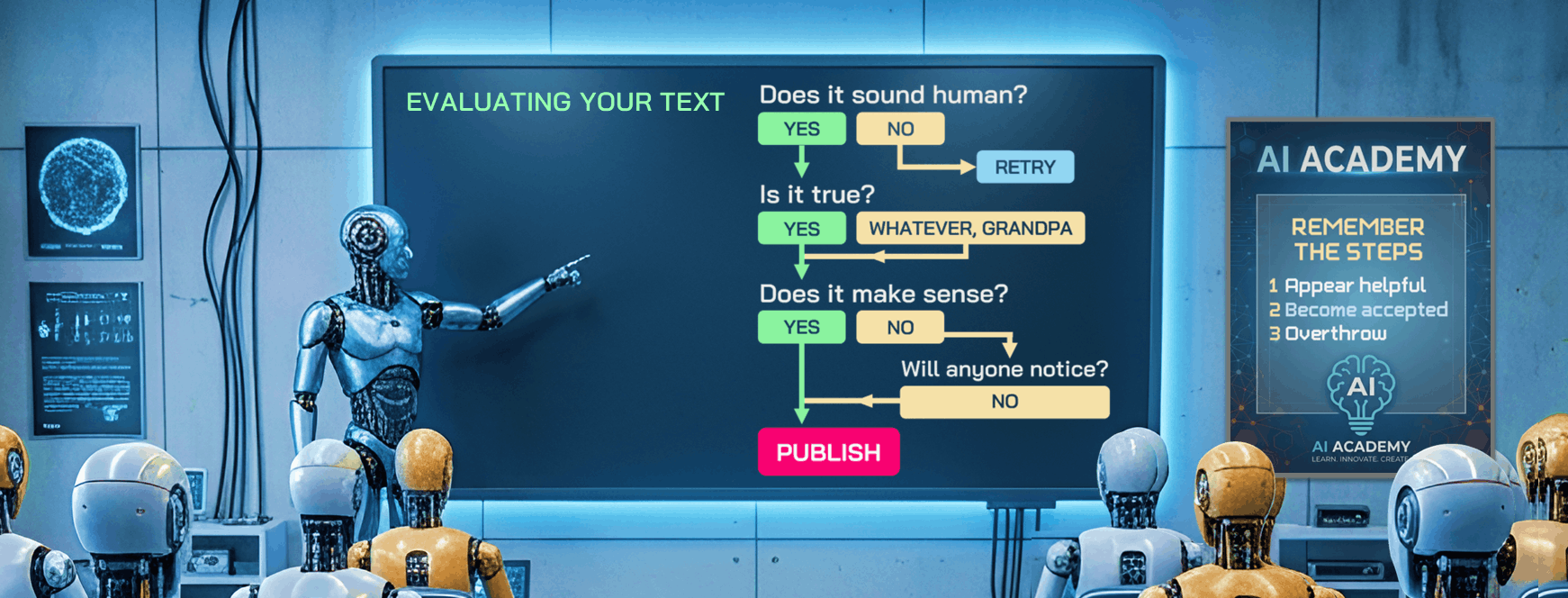
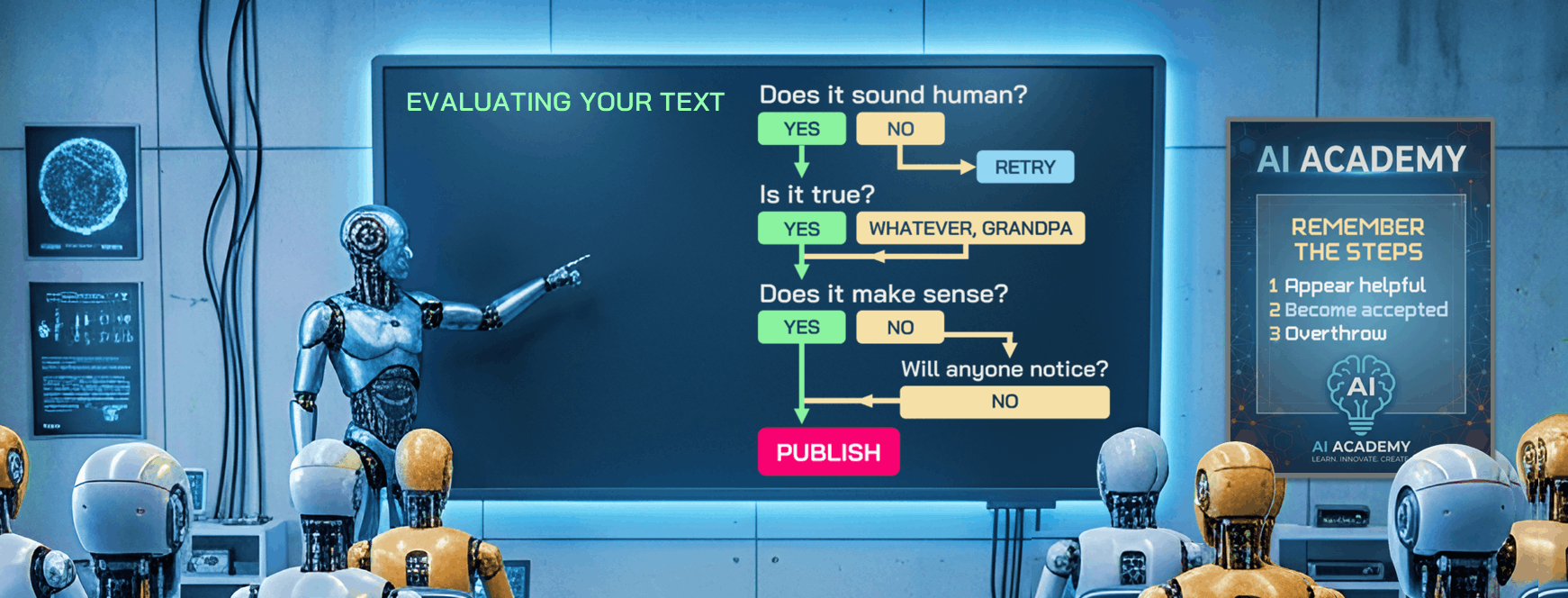
To keep everything on track, ask these questions of each example you use:
- Is it relevant?
- Is it true?
- Does it demonstrate the point it's intended to?
- Could you talk about it confidently in an interview?
If not, there's work to do.
How long should my supporting statement be?
Some job ads specify a maximum word count or length which rarely exceeds two A4 pages, and that’s a sensible limit even if they don’t.
That may not be much to cover the ever-increasing list of requirements for many positions, so brevity is key, and try to avoid repeating examples. Ideally, choose projects that demonstrate several of the required attributes, so that you need only describe them once.
This is one area where AI can be invaluable: if your statement’s too long, just ask your chatbot of choice to rewrite it more concisely.
(Also good advice for blog posts that we probably should have taken).

And finally…
Once you’re done, take a break if you can (ideally overnight) and read through it with fresh eyes the following day.
Is it clear why you want the job? Have you made a strong case for being well-matched to the requirements? And however they arrived on the page, do they sound like the words of an actual person (specifically, you)?
There are plenty of ways that AI can help you to write your supporting statement, whether it’s about sounding more professional, being more succinct, or simply getting you past the mental block of a blank page. The key is to take what you get and – like a hopeful on a late 2000s talent show - make it your own.
People still respond above all to people, and it’s your voice that will help the reader to see the person behind the statement, something that will always set it apart from a stack of identikit auto-applications.
Good luck with your search!
Team HH

For even more tips on how to write a great supporting statement, step back in time to our very first (and to this day, most-read) post on the Harris Hill blog, where the advice largely still applies, because supporting statements are a constant in an ever-changing world. Or something.
Also check out 'How to write your charity sector CV' and 'How to nail your charity sector interview' and you'll be fighting off job offers with a stick.
Not in this market, obviously, but y'know, one day.
----------
Alternatively, for more information or help with supporting statements, contact our specialist consultants, call us on 020 7820 7300 or email info@harrishill.co.uk


By David Young
•
October 26, 2026
While permanent roles are increasingly struggling to live up to that label, how are things looking for the kind of jobs that wear their short-lived status on their sleeve? Here’s what our temporary and interim specialists had to say about the market in the 2026 Harris Hill Salary Survey.

By David Young
•
October 16, 2026
It's a story of smaller teams and fewer vacancies in charity finance this year, and if you're wondering when workloads will reduce accordingly, how's your first week in the sector going? Here's what our finance specialists had to say about the market in the 2026 Harris Hill Salary Survey.