


How to write your charity sector CV - part 2
David Young • March 14, 2023
Previously, on How To Write Your Charity Sector CV: how to approach your CV, what it's for and what you're aiming to achieve, with tips on format and design.
In part two, we're looking at
your career history and what to say about your roles, responsibilities and achievements, skills and qualifications, and just as importantly, what not to say at all.


Your career history
● Presenting your roles in reverse order serves most people pretty well, as you'll start with the most recent, typically the most relevant.In each case, provide the job title/s, organisation and dates you worked there, along with a carefully-chosen selection of your responsibilities and achievements.
● Getting that selection right is the challenge, so keep the formatting consistent, but everything else flexible so as not to restrict your choices. For example, don't feel you need five bullet points on every job, just because one has - it's likely to mean skipping relevant recent details in favour of pointless filler later on. If there's one thing we know, it's that getting the job will not come down to those six months in 2009 where your ‘duties included photocopying and answering the telephone’.
● Remember that responsibilities and achievements are different things. Saying you 'were responsible for x' tells us what the job involves, but not how well you performed. For that, you’ll need achievements: tangible results, outcomes or pieces of work for which you can legitimately take credit. Where it was a team effort, don’t claim otherwise but do highlight what you personally brought to the project that contributed to its success.
Where possible, quantify your achievements with numbers, because it gives them a clear, unambiguous meaning: 'improved x significantly' is subjective, but we all know exactly how impressed to be with 'increased x by 30%'.
● Most employers still prefer to see a history of fewer, longer-term jobs over a succession of short term roles. This might seem a little harsh in the current climate, with its ‘flexible workforce’, ‘gig economy’ and other popular euphemisms for ‘zero job security’ that may have left you little choice.
What else to include
● Kicking off with some kind of grand personal statement is optional, but if you’re going to, keep it to a single paragraph, the best of which in our view tell us what you want to do, not just who you are.
'Inspirational' quotes, however, are best left where they belong: ruining perfectly good pictures of sunsets on your annoying friend's Instagram feed.
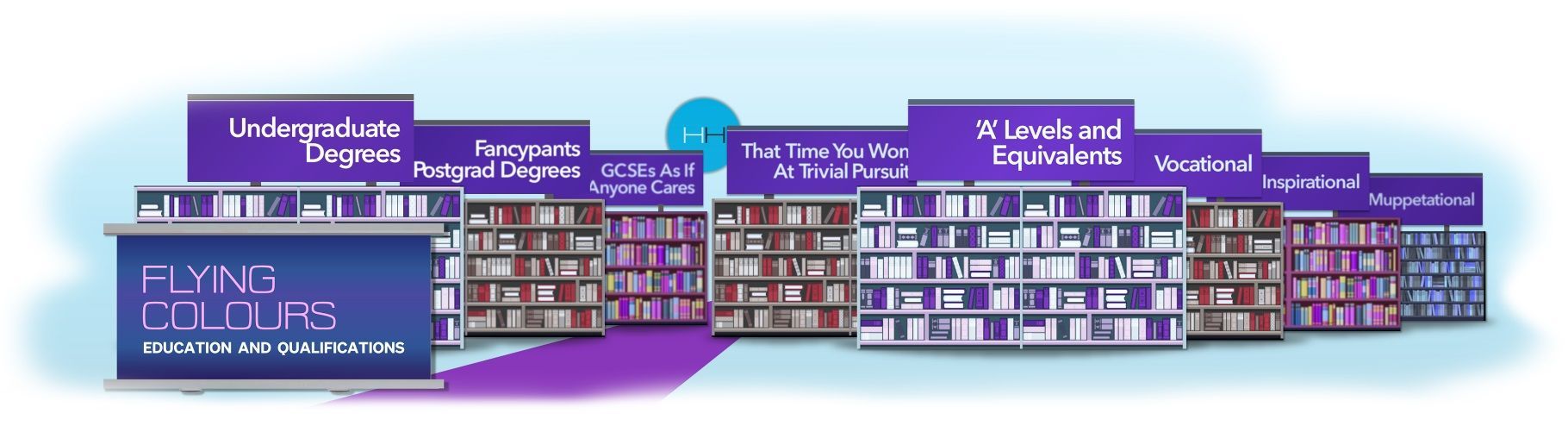
● Your key skills and professional or specialist qualifications, including any relevant training you’ve completed and software packages you’re familiar with. Details of your education too, but not too many, of which more in a moment.
● Your charity-related experience, as discussed in part one.
Did you know?
Most recruitment agencies, ourselves included, actually remove your name and personal details before sending your CV to a client. This helps to protect your privacy and reduces the risk of discrimination due to unconscious bias: decisions can only be made on the content of your CV and not, for example, on the perceived ethnicity of your name.
To sum all this up in seven points:
1. Remember it’s a communication and a marketing tool, not some ancient official record.
2. Know your target audience and your strengths, then tell them in a way that’s clear, concise and consistent.
3. Write for a human audience and bring your charity experience to the fore.
4. Focus on what’s relevant to the role and what the employer needs to know.
5. Tailor your work history to your audience: say more about the most relevant roles and less about the rest.
6. BRING IT ON: simple layouts, Word docs, quantifiable achievements, skills and professional qualifications, short personal statements, clear commitment to the sector.
7. BE GONE: elaborate designs, photos, overly personal details, irrelevant interests, references on request, meaningless jargon, what you scored in Miss Richardson’s test at the end of Year 9.
Final thoughts
We hope you'll find this a useful contribution to the CV adviceberg, and helpful when it comes to writing your CV.
It's by no means the only way to approach your CV of course, and for legal reasons we should probably mention that it won’t guarantee you a brilliant job or a lifetime of success: there's still every opportunity to spend your later years an embittered husk of your former self, wondering where it all went wrong in a regional Wetherspoons.
But at least by applying these methods, it (probably) won’t be down to your job applications.
Good luck with your search!
David Young, Director of Marketing, Harris Hill, with the invaluable assistance of our charity recruitment specialists.
For more advice and assistance with your CV, contact your specialist consultant, call us on 020 7820 7300 or get in touch via info@harrishill.co.uk

By David Young
•
October 1, 2026
How's the recruitment market looking for those delivering their organisation’s services and providing essential support in areas like Operations, Admin, Data, HR and Projects? Here's our overview of the current trends from our 2026 Salary Survey.
By David Young
•
September 25, 2026
How can charity marketers best survive the current recruitment market, facing tough competition from their own weight of numbers, and now threatened by the electronic assistant to end us all? Here’s what our specialists had to say in the 2026 Harris Hill Salary Survey.