





How can charities support financial wellbeing in a cost of living crisis?
Nicola Greenbrook • January 26, 2023


What is the cost of living crisis?
We are facing the biggest cost of living crisis in a generation. According to The Institute for Government, the ‘cost of living crisis’ refers to the fall in ‘real’ disposable incomes (that is, adjusted for inflation and after taxes and benefits) that the UK has experienced since late 2021. The main cause of the crisis is levels of high inflation that outstrips wage and benefit increases, and it has been further exacerbated by tax increases.
The cost of living crisis continues to be a huge source of concern for many of us, as the price of food shopping, gas and electricity bills and fuel continues to soar. In addition, high customer demand, supply chain issues and Russia’s invasion of Ukraine have contributed to the sharp rise in costs. The Office for National Statistics (ONS) statistical bulletin Public opinions and social trends, Great Britain: 21 December 2022 to 8 January 2023 (released 13 January 2023) reports that 92% of adults consider the cost of living to be an important issue facing the UK today.
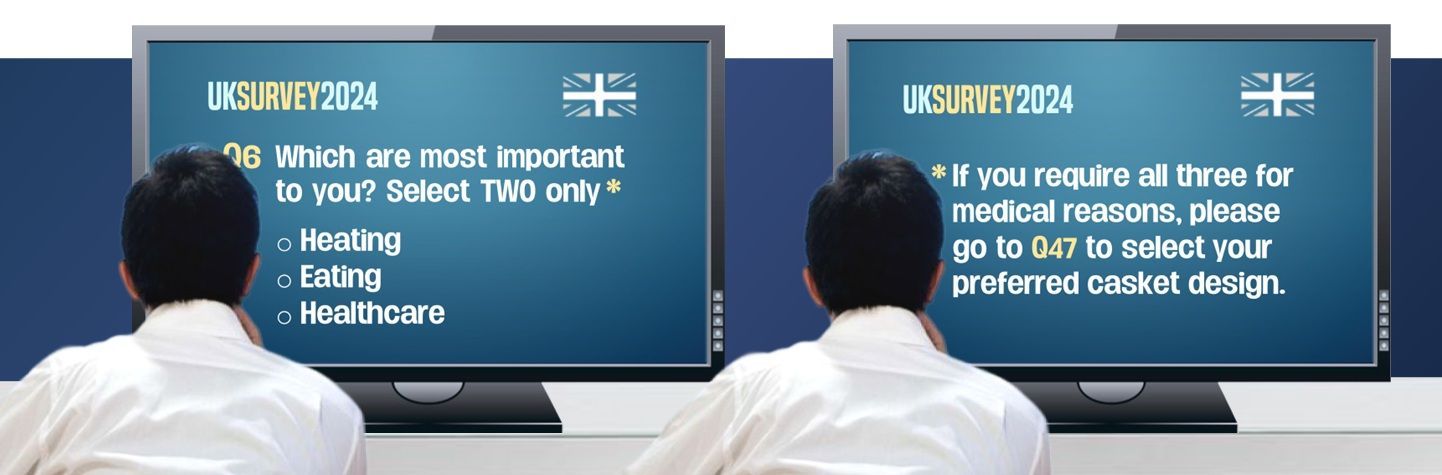
How is it affecting us?
A significant hike in bills, food and the general cost of living means that, for many individuals, their monthly salary or annual pay rise is not sufficient to prevent serious financial detriment. The ONS reports that around 9 in 10 adults (93%) declared that their cost of living had increased compared with a year ago. Those who have seen their incomes squeezed and are struggling may be forced to rely on a quick fix to mitigate the financial pressures, such as a high-interest credit card or loan, which could lead to long-term, spiralling debt.
The cost of living crisis has also been linked to a reduction in wellbeing, and the British Medical Association considers the cost of living crisis to be a health crisis, as well as an economic one. Some individuals may be forced to cut back on the essentials needed to maintain their health; the absence of sufficient food could lead to malnourishment and living in a home that is not adequately heated could lead to the development of respiratory conditions or worsen existing ones, putting them at serious risk.
Mind reports that the cost of living crisis is also taking a huge toll on our mental health with increased anxiety and worsening mental health. It recognises that poverty and mental health problems have a two-way link; poor mental health can make earning and managing money harder, while worrying about money can worsen mental health. All too soon, this can feel like a vicious circle.
Finally, the CIPD’s Reward Management Survey (April 2022), reports that one in four employees say money worries affect their ability to do their job.

How is the crisis affecting the charity sector?
- The ICAEW reports that rising bills are taking their toll across the sector, and the Charities Aid Foundation notes that 82% of charity leaders are concerned about how to pay their own utility bills. As more people rely on charitable support to survive the crisis, and find themselves tightening their budgets with less to give, many charities are seeing a fall in charity income due to the decline of public giving as noted by the NCVO’s CEO, Sarah Vibert.
- Charity Excellence Framework reports that the ability for charities to meet demand and maintain service standards continues to decline and those at the front line of poverty, such as food banks and advice centres, are being hit hardest.
- Finally,
Charity Digital reports that charities are responding to the crisis in several different ways for themselves, their service users and society in general. This includes an increase in campaigning activities and calling upon key policymakers and parliamentarians to further support their service users, sharing advice via information hubs and considering more innovative ways to meet their service users' needs such as reframing the typical food bank. The charity also offers some suggestions on how charities can protect themselves from rising inflation.


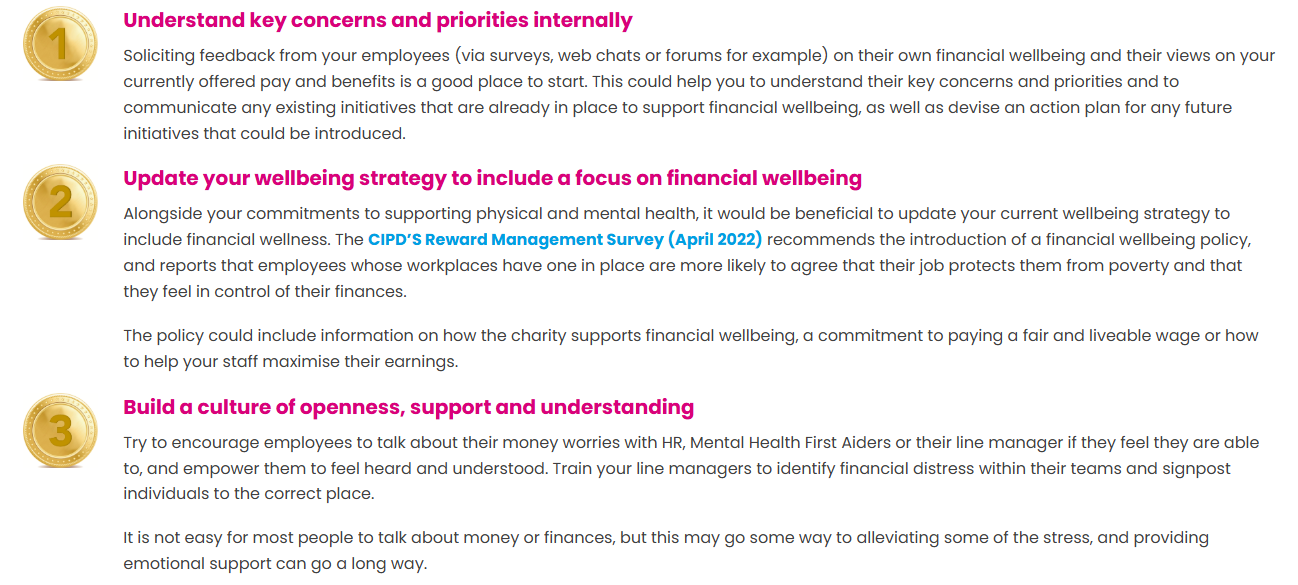
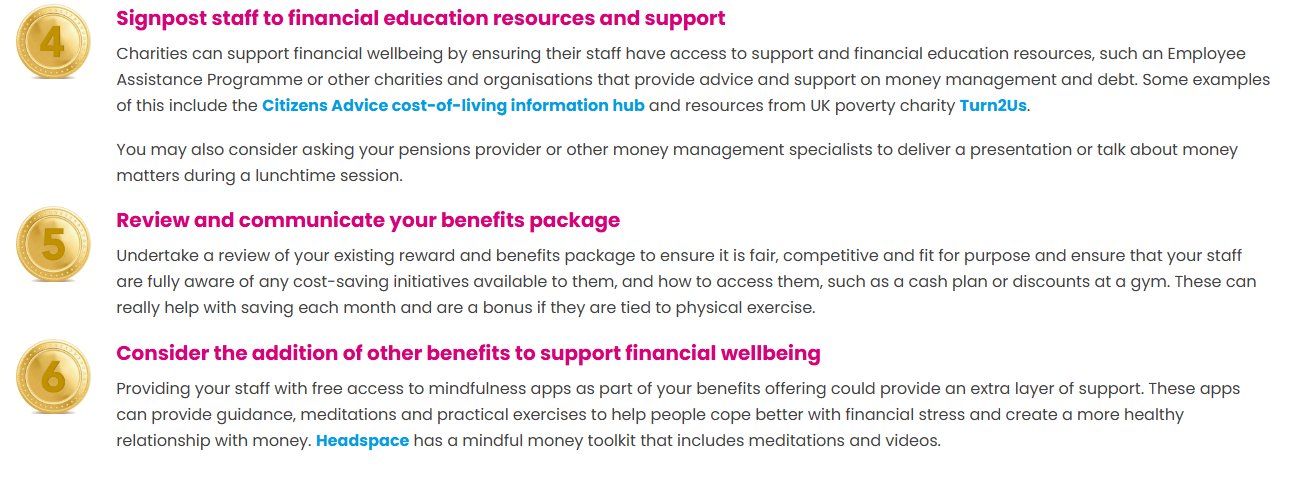
As we continue to live through the crisis, employees are faced with critical financial challenges which can have a devastating impact on their day to day lives, health and work.
Employers have a crucial role to play in supporting their employees' financial wellbeing, and while charities may not have the funds to offer monetary help, there are nonetheless steps they can take to provide advice, information and support to help protect staff from poverty and mitigate against the most damaging effects of the cost of living crisis.
Nicola Greenbrook, London based freelance writer, podcaster and HR Specialist


By David Young
•
October 1, 2026
How's the recruitment market looking for those delivering their organisation’s services and providing essential support in areas like Operations, Admin, Data, HR and Projects? Here's our overview of the current trends from our 2026 Salary Survey.

By David Young
•
September 25, 2026
How can charity marketers best survive the current recruitment market, facing tough competition from their own weight of numbers, and now threatened by the electronic assistant to end us all? Here’s what our specialists had to say in the 2026 Harris Hill Salary Survey.